Why tap water can suddenly become unsafe
Even in countries with good water infrastructure, incidents can happen — pipeline repairs, contamination or low pressure. Today’s example in the Netherlands: about 125,000 households in the Utrecht region received a boil-water advisory. This shows how vulnerable water supply can be.
What a boil-water advisory means
It means: boil tap water for at least 1 minute before drinking it, making coffee/tea, cooking, or preparing baby food. Washing and showering are usually still possible. Because such incidents can last several days, it makes sense to have your own fallback.
Three practical solutions at home
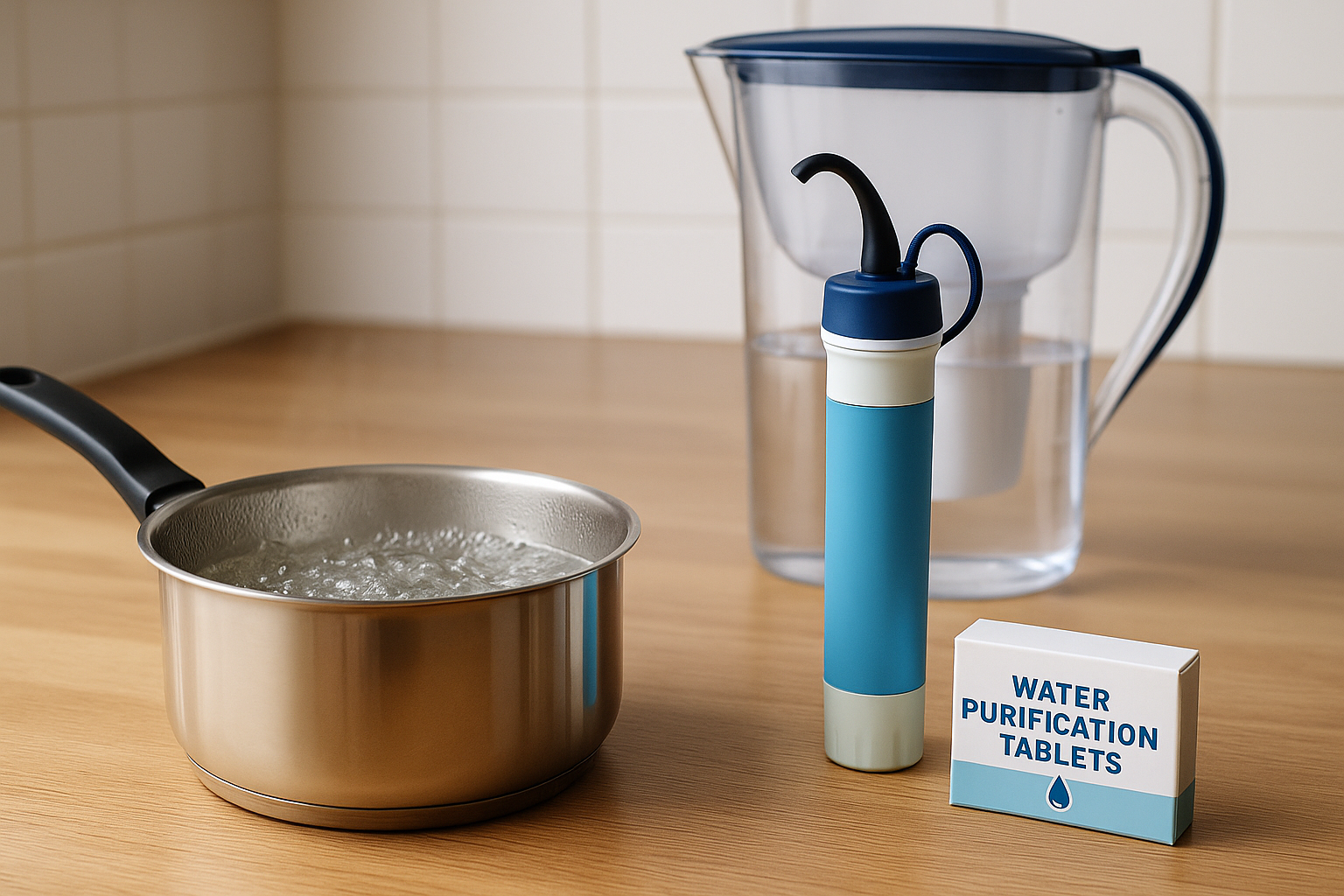
- Boil the water: the simplest and very effective.
- Use a portable water filter: see our range here: https://www.prepping.eu/noodrantsoen/drinkwater/origin-outdoors-water-filter
- Use purification tablets: light, cheap and made for emergencies: https://www.prepping.eu/noodrantsoen/drinkwater/desinfectie-en-conserveringstabletten-voor-drinkwater
Recommended minimum stock
- Water: 3 L per person per day (3–7 days)
- 1 portable water filter for refilling
- 1 pack of purification tablets as backup
- Separate bottles/containers for boiled vs. unboiled water
Prevent re-contamination
- Store boiled/treated water only in clean bottles.
- Label bottles with date and “boiled” or “treated”.
- Use a different jug for raw tap water.
- Replace unused treated water after 24 hours.
What the Utrecht case shows
Incidents don’t only happen in remote areas — they can also hit cities. If you already have a filter and tablets, you don’t have to wait for bottled water delivery or for the supplier to give the all-clear. That is real preparedness.
Conclusion
Keep it simple: boil if advised, filter if needed, purify if you have to. With one small water kit in the house you stay safe, even when thousands of households around you suddenly cannot drink from the tap.