Assess risk first
Source, turbidity and likely pathogens dictate your method. Clear mountain stream? Filtration may suffice. Urban floodwater? Always combine (filter + boil or chemicals).
The four core methods
- Boiling: 1 minute rolling boil (3 at altitude). Kills bacteria, protozoa and viruses.
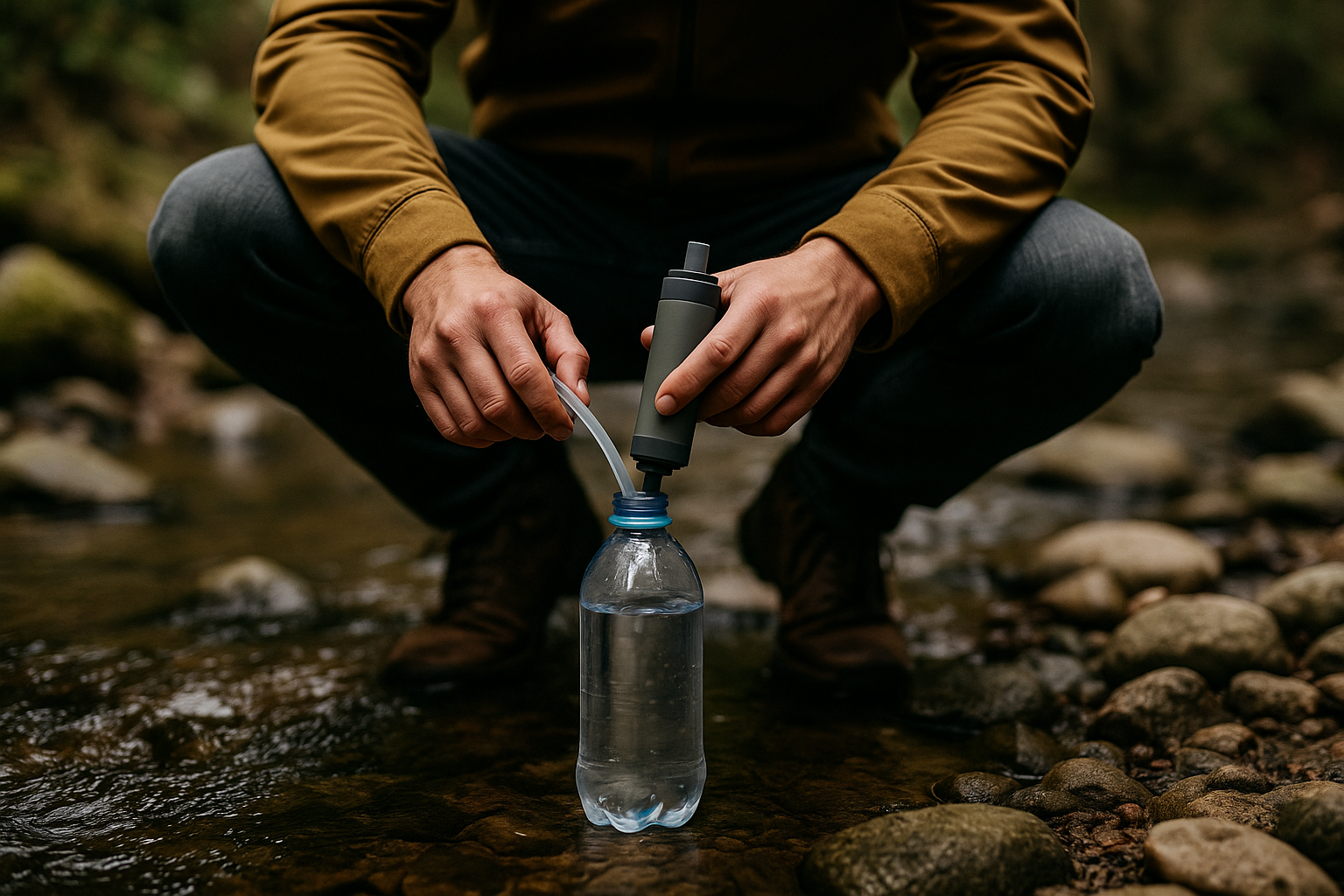
- Filtration: hollow fiber/ceramic (0.1–0.2 μm) removes bacteria/protozoa. Mind flow rate, lifespan, backflushing.
- Chemicals: chlorine or iodine tablets. Respect contact time; neutralize taste as needed.
- UV: UV pens work on clear water; reduced efficacy when turbid.
Order of operations
- Turbid water? Prefilter (cloth/coffee filter) → then filter.
- Virus concern (sewage/floodwater)? Filter + boil or filter + chlorine.
- On the move? Tablets or UV for clear water.
Storage & hygiene
- Use clean, food-safe containers (HDPE jerrycans). Label date/source.
- Store cool/dark. Keep “clean” and “dirty” gear strictly separate.
Common mistakes
- Filtering alone for sewage-contaminated water (virus risk!)
- Not waiting required contact time for tablets
- Using UV on turbid water
- Skipping backflush/cleaning, causing clogged filters
When unsure, combining methods is best. Filter + boil is the gold standard.