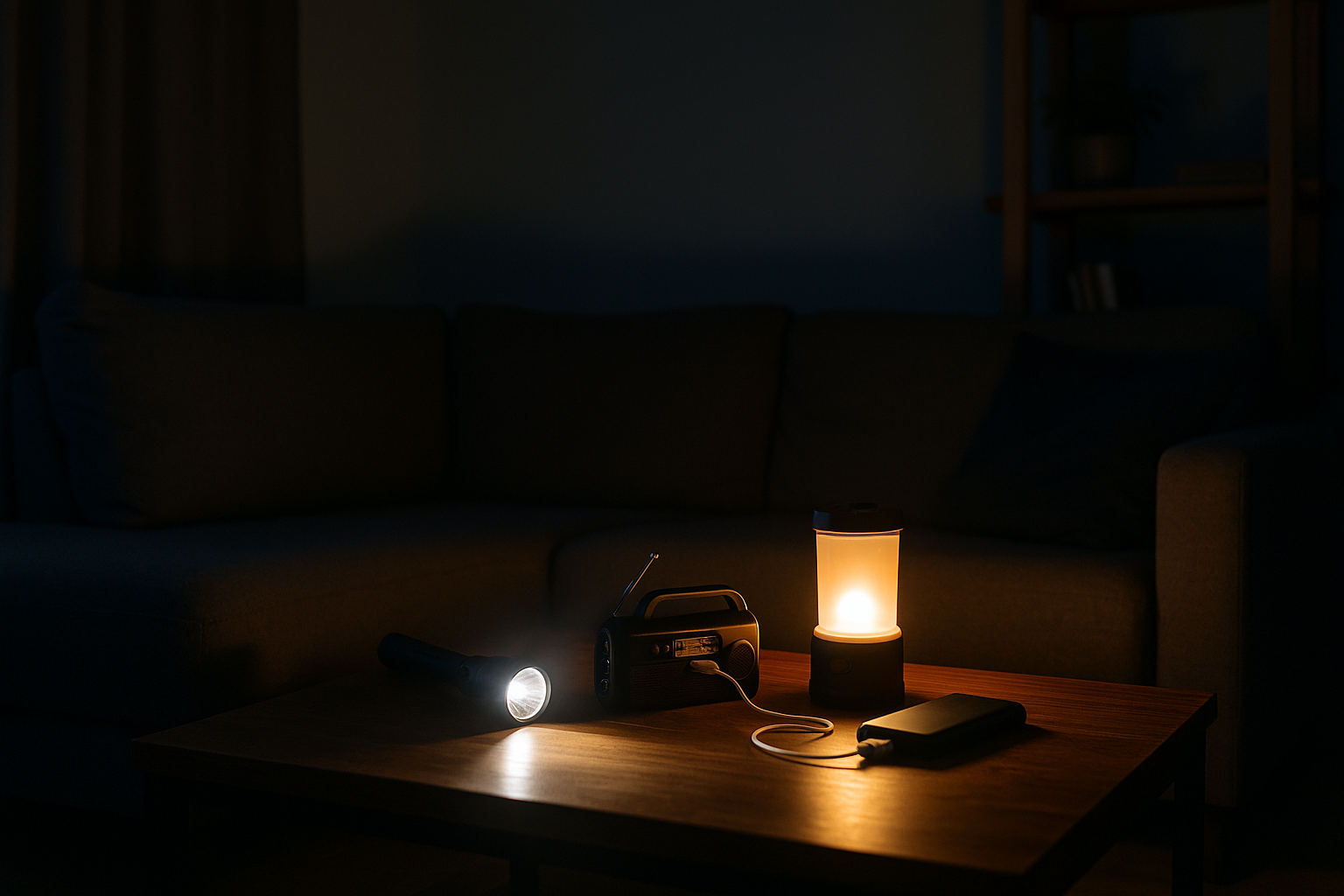
Why prepare for blackouts?
Outages can last minutes to days. Without electricity you lose lighting, heating/cooling, cooking, internet and card payments. A compact plan and a few smart tools keep you in control.
Before the outage: get the basics ready
- Light: at least one flashlight per room and an LED flashlight with powerbank in living/bedroom.
- Info & comms: emergency radio (crank/solar) and charged phones.
- Backup power: one or more powerbanks (ideally with solar input).
- Water & food: 3 L pp/day and simple shelf-stable meals. See food advice.
- No-grid cooking: small gas/alcohol stove, pot, matches/lighter, extinguisher. Ventilate well.
- Cash: small bills for purchases when card systems fail (see emergency cash).
- Docs & plan: contacts, light locations, shut-offs and household rally point.
Quick checklist (printable)
| Category | Minimum |
|---|---|
| Light | Flashlights + headlamp, spare cells; 1 per room |
| Power | Powerbank(s) 10,000–20,000 mAh + cables; optional solar |
| Information | Emergency radio (crank/solar), charged phone |
| Water & food | ≥ 3 L pp/day; ready-to-eat + one-pot meals |
| Cooking | Camping stove + fuel, lighter/matches, pot |
| Safety | First aid, fire blanket/extinguisher, battery CO/smoke alarms |
| Cash | Small denominations + some coins |
During the outage: step by step
- Stay calm & safe: check for fire/gas risks; use flashlights, avoid candles near leaks.
- Check breakers: home issue or area-wide? Look outside for street/bneighbors.
- Save power: use low modes; charge phones gradually from powerbanks.
- Cold chain: keep fridge/freezer closed; note outage time. Use a cool box if needed.
- Cooking: one-pot meals; ventilate and keep an extinguisher close.
- Information: radio for updates; preserve phone battery for essentials.
- Thermal comfort: layer up/blankets; in summer, ventilate at cool hours and shade windows.
Food safety
- Fridge: safe ~4 hours closed; freezer ~24–48 hours (well-filled lasts longer).
- Rule: when in doubt, throw it out. Track times and inspect.
- Plan: use perishables first, then shelf-stable, then dry staples.
Electronics & batteries
- Prioritize critical devices (phone, light, radio) for charging.
- Use short, thick cables to reduce voltage drop.
- Keep powerbanks at room temperature; cold temporarily reduces capacity.
Medical & vulnerable household members
- Keep 14–30 days of essential meds where possible.
- Store medical devices with spare batteries.
- Plan extra heating/cooling for babies/elderly; include in your emergency plan.
After the outage: restore & rotate
- Check fridge/freezer; discard questionable foods.
- Fully recharge powerbanks; replace used fuel/batteries.
- Note improvements and restock immediately.
Useful internal links
Core gear we recommend
Conclusion
With light, backup power, simple meals and a clear plan you remain independent and calm during blackouts. Stage your basics now, test every six months and restock after each event. Preparation saves time, money and stress.