What Is a Bug Out Bag?
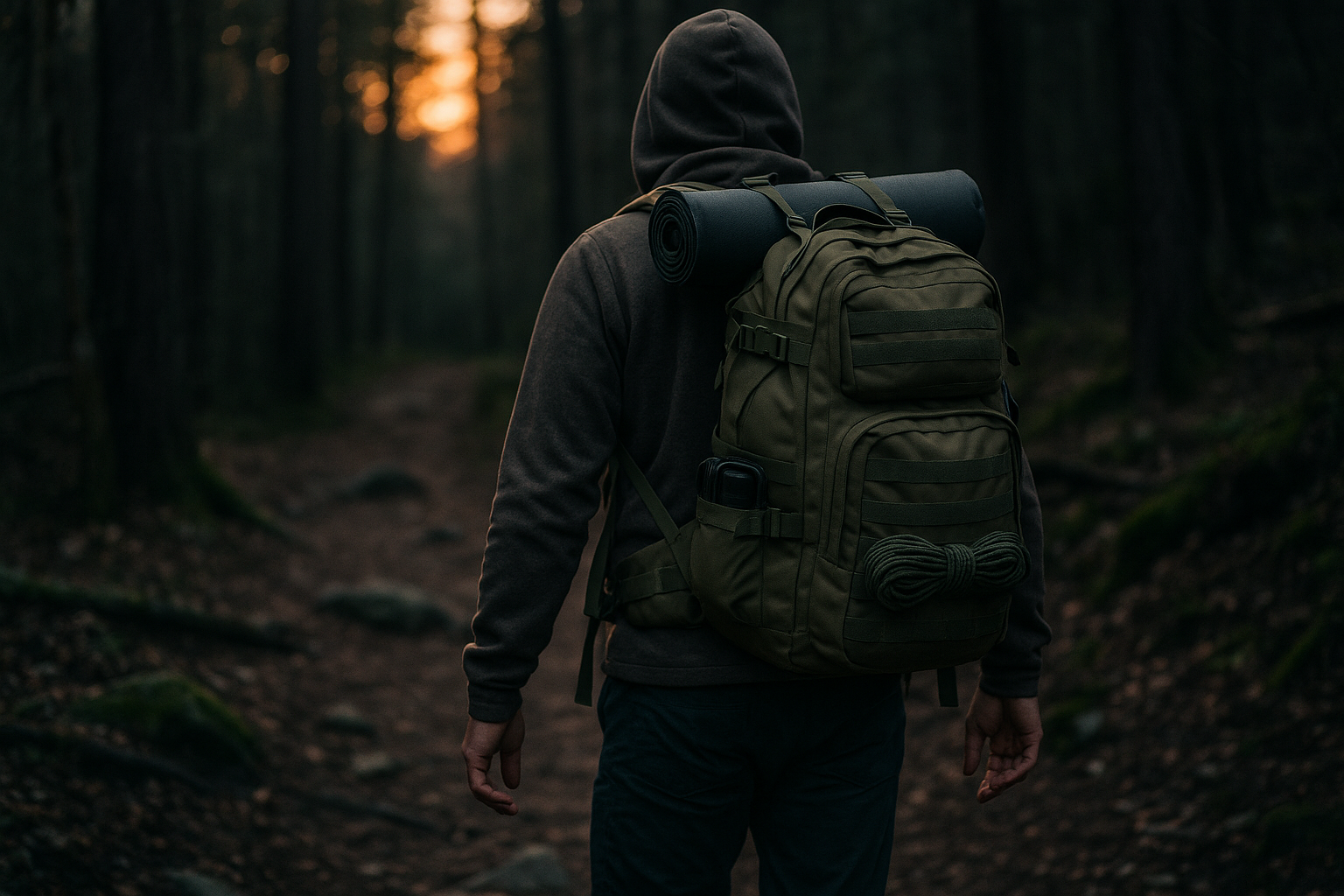
A Bug Out Bag – also known as an emergency or evacuation bag – is a backpack filled with essential supplies that allow you to survive independently for at least 72 hours. Its purpose: to be ready to leave immediately when staying becomes unsafe.
Why You Need One
In an emergency there’s no time to think or pack. Having your essentials pre-organized prevents panic and saves valuable minutes. Whether you evacuate your home or get stranded on the road, a Bug Out Bag gives you security and structure.
Basic Structure
Organization matters more than quantity. Use separate pouches for each gear category so you can find what you need quickly, even in the dark.
Essential Categories
- Water & purification
- Food & calories
- Shelter & warmth
- Light & communication
- Health & first aid
- Tools & repairs
- Clothing & protection
- Documents & cash
Detailed Packing Guide
Water & purification
Carry at least two liters per person and include a small filter or purification tablets. Reusable bottles or hydration bladders save space and reduce waste.
Food & calories
Choose compact, long-lasting items: energy bars, nuts, freeze-dried meals. The Base Emergency Kit is a great foundation to start with.
Shelter & warmth
Include an emergency blanket, tarp or compact tent. Add a poncho, gloves and a hat. A light sleeping bag keeps you functional through cold nights.
Light & communication
Take a flashlight, headlamp and crank or solar radio. The Emergency Radio with Power Bank is ideal for charging your phone while staying informed.
Health & first aid
Pack a complete first aid kit: dressings, antiseptics, painkillers and personal medication. The Extended Emergency Kit includes a ready-to-use medical set.
Tools & repairs
A multitool, knife and duct tape solve most problems. Add paracord, lighter and compact saw for emergencies.
Clothing & protection
Use layered clothing that dries quickly and fits multiple seasons. Extra socks are a must; dry feet mean mobility and safety.
Documents & cash
Keep photocopies of identification, insurance, medical notes and emergency contacts in a waterproof pouch. Include small bills for quick transactions.
Ready-Made Additions
- Coghlans Survival Kit in a Can – ultra-compact backup kit.
- Base Emergency Kit – covers essentials for 72 hours.
- Extended Emergency Kit – adds comfort, light and power options.
Weight & Comfort
A good Bug Out Bag should remain portable. Aim for 10–15 kg including water. Keep heavy items close to your back and lighter items on top. Practice walking with it — real testing beats theory.
Maintenance
- Check every 6 months for expired food, batteries and medicine.
- Field-test your bag during a weekend trip to see what works.
- Adapt contents to season and location.
Bug In or Bug Out?
Sometimes it’s safer to stay home if your location is secure and stocked (“bug in”). A Bug Out Bag is your last-resort plan for mobility and freedom when conditions change.
Conclusion
Your Bug Out Bag isn’t about fear – it’s about readiness. It gives you control, comfort and confidence when things go wrong. Start with a base kit, expand gradually and stay prepared to move when needed.