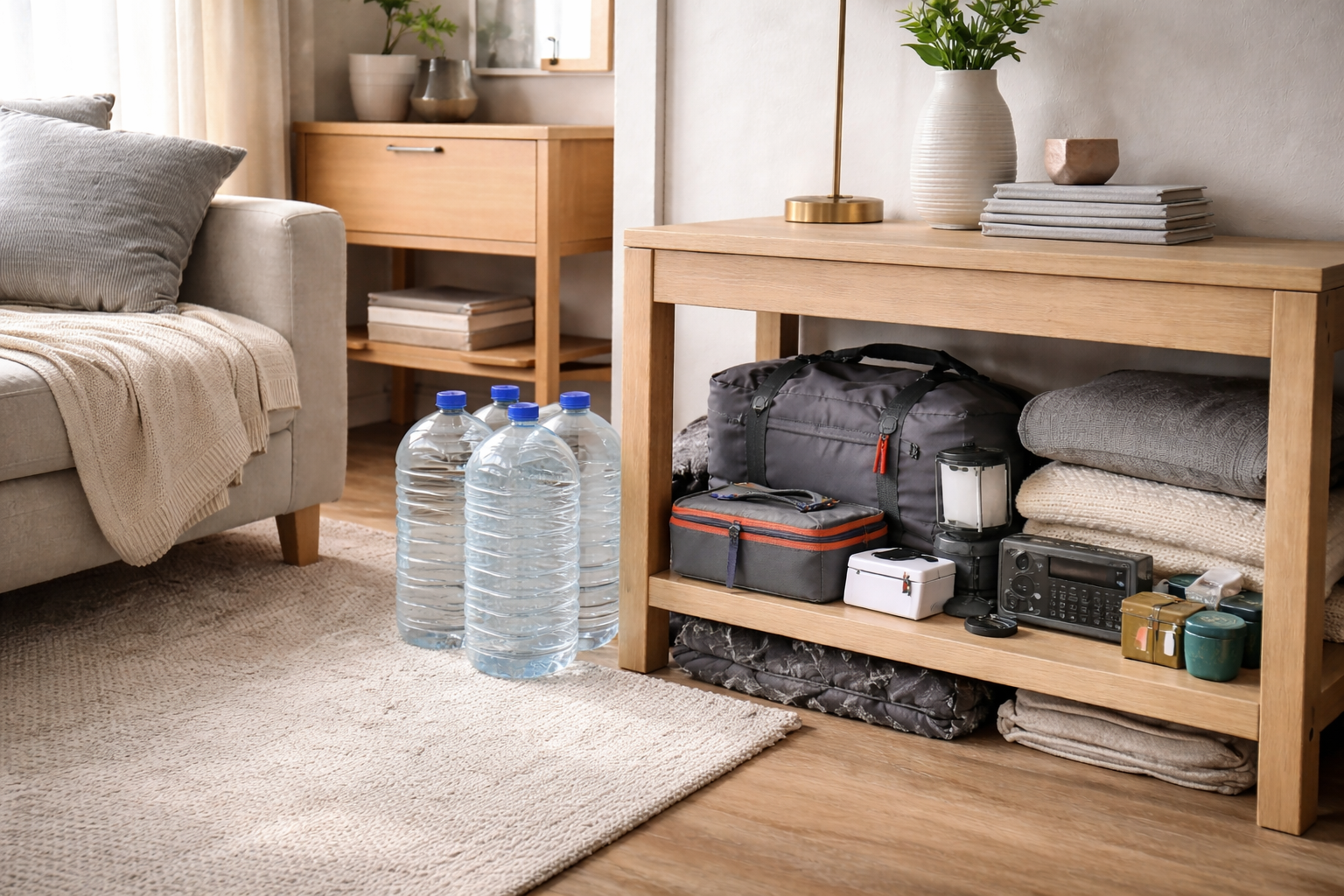
Even without a garage, attic, or basement, you can still be far better prepared for power outages, water issues, or short-term disruptions. Apartment prepping is not about huge stockpiles. It is about smart choices, compact storage, and practical self-reliance.
Why apartment prepping is different
If you live in an apartment, you usually have less storage space and a greater dependence on services such as electricity, elevators, central heating, and running water. That is exactly why it makes sense to think about a compact and realistic way to prepare for emergencies.
Prepping in a small home does not mean filling your space with excessive gear. The key question is simple: what do you need to keep yourself and your household going independently for 72 hours?
The main risks in an apartment
In an apartment, the impact of a disruption is often felt faster than in a detached house. Common examples include:
- power outages that affect lighting, wifi, chargers, and sometimes cooking;
- elevators, intercom systems, and electric doors no longer working;
- problems with drinking water or reduced water pressure;
- limited ventilation or indoor temperature control;
- less room for supplies and backup equipment.
Once you understand these risks, you can prepare for them in a focused way without overbuying or overcrowding your home.
Start with water
Water is the top priority in any emergency. In an apartment, storing large barrels is usually impractical, but compact solutions can still make a major difference. Think of drinking bottles, stackable water containers, or a small emergency reserve divided across different places in your home.
A water filter or purification solution can also be a valuable addition. It gives you more flexibility if the regular water supply is temporarily interrupted or if you need to rely on an alternative source.
Choose food that saves space
A good apartment emergency food supply consists of items that last a long time, take up little room, and are easy to prepare. Ideally, choose food you already use in daily life. That helps prevent waste and makes stock rotation easier.
Good examples include:
- long-life meals;
- rice, pasta, and oats;
- canned goods and freeze-dried food;
- bars, nuts, and calorie-dense snacks;
- coffee, tea, and comfort essentials.
In a small home, visibility and structure matter. Store your emergency food in bins, drawers, or under-bed storage so you can use your available space efficiently.
Lighting and power: small items, major value
During a blackout, apartment residents quickly notice how dependent daily life is on electricity. Reliable lighting and limited backup power can make a substantial difference.
Useful options include:
- a dependable flashlight or headlamp;
- spare batteries;
- a power bank for your phone and small electronics;
- an emergency radio with charging capability;
- compact charging solutions for communication and basic information access.
In an apartment, bigger is not always better. Compact and efficient equipment is often the most practical approach.
Cooking without grid power: safety comes first
Many apartment residents rely entirely on electric cooking. In a power outage, that option disappears immediately. That is why it is worth planning ahead for alternatives.
Not every cooking solution is suitable for indoor use. Safety should always be the first consideration. Choose an option that fits your living environment, ventilation, and building rules. In many cases, it is also wise to keep part of your emergency food supply made up of items that can be eaten without cooking.
Do not overlook hygiene and sanitation
In an apartment, hygiene and sanitation become especially important if water is limited. Wet wipes, trash bags, hand sanitizer, toilet paper, and basic cleaning supplies take up little space but become immediately useful in an emergency.
A compact first aid kit should also be part of every basic preparedness setup.
Think about evacuation and access
If you live on an upper floor, you should also consider elevator failure or limited access. Make sure your most important items are easy to grab. Think of identification, medication, keys, a flashlight, water, a power bank, and a small grab bag.
Apartment preparedness is not only about sheltering in place. It is also about being able to leave quickly and in an organized way if necessary.
Store smart without creating clutter
One of the biggest barriers for apartment dwellers is lack of space. Fortunately, prepping does not have to look messy or take over your home. Use flat storage bins, under-bed space, unused cabinet areas, and logical storage zones. Grouping supplies by function helps you stay organized and act faster when needed.
What do you minimally need for 72 hours?
A compact 72-hour apartment preparedness setup should include:
- drinking water;
- long-life food;
- lighting;
- a charged power bank;
- a radio or other information source;
- first aid and medication;
- hygiene products;
- warm clothing or blankets;
- copies of important documents;
- a small bag for rapid evacuation.
Conclusion
Prepping in an apartment is not about maximizing storage. It is about preparing intelligently. With a compact reserve of water, food, lighting, power, hygiene items, and basic equipment, you can significantly improve your self-reliance. Even with limited space, it is entirely possible to become much better prepared.
If you start small and build step by step, you will quickly see that being prepared does not have to be complicated.