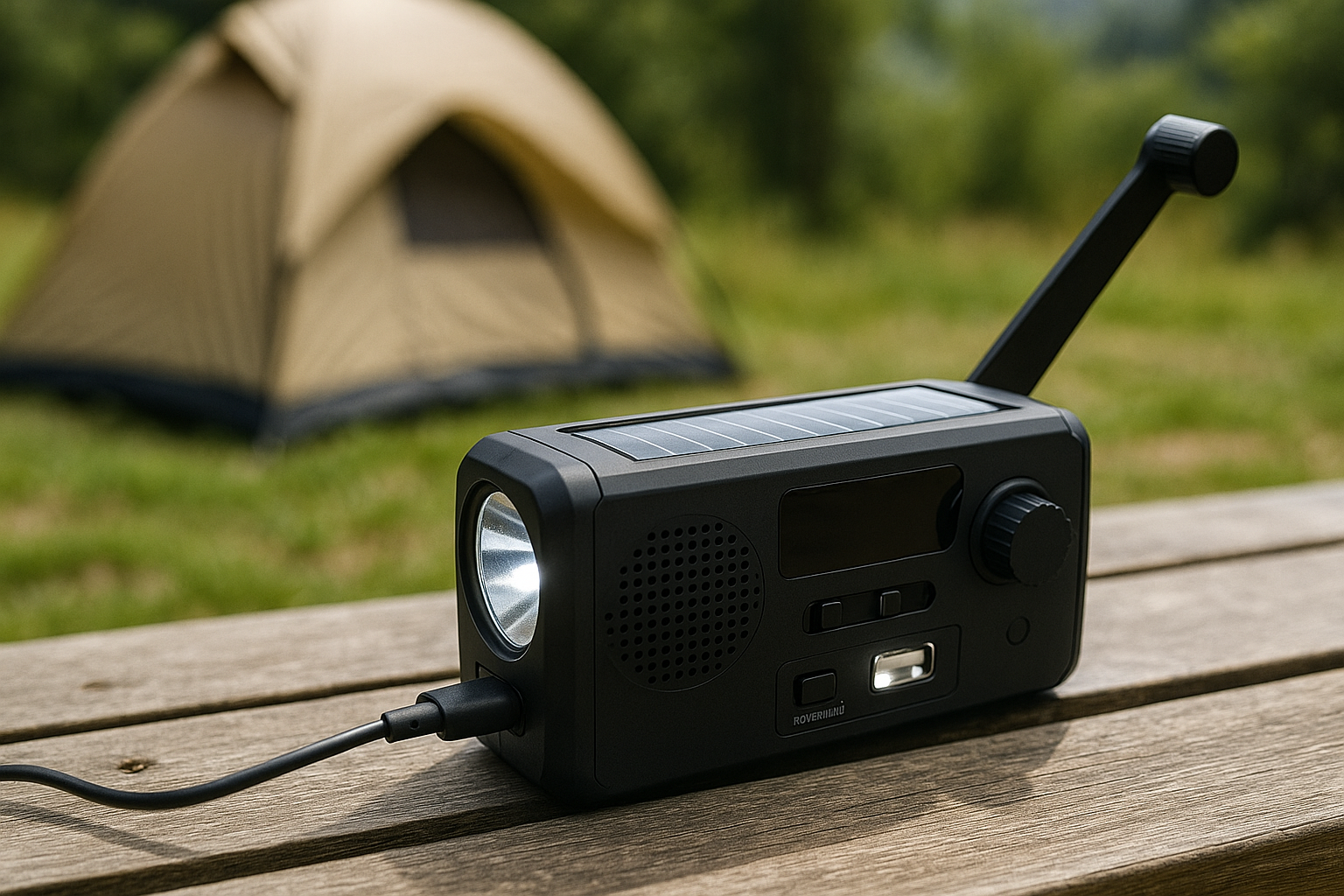
Why an emergency radio matters
An emergency radio keeps you connected when everything else stops. During power outages, natural disasters or network failures, phones may die or lose service. Radios with crank generators and solar panels can keep running indefinitely, providing vital news, alerts and weather info.
Key features of modern emergency radios
- Crank power: generate energy manually, no grid needed.
- Solar charging: slow but steady daytime charging.
- Power bank: charge your phone or small lamp via USB (usually 2000–5000 mAh).
- Flashlight & SOS mode: integrated LED light and distress signal.
- FM/AM/DAB+: tune in to emergency or public stations, both analog and digital.
Analog vs DAB+
Traditional radios rely on FM/AM, while newer versions such as the Multi DAB+ Emergency Radio deliver crystal-clear digital sound and improved stability. In much of Europe, DAB+ coverage is growing fast, making it the smarter long-term choice.
Power options & autonomy
The best radios combine crank, solar and USB-charging to ensure days of functionality without mains power. This redundancy makes them reliable for both emergencies and outdoor use.
Everyday use
Emergency radios aren’t just for crises. They’re equally useful when camping, hiking or attending off-grid events. Models like the Emergency Radio with Power Bank and Flashlight are compact, versatile and robust enough for travel.
Usage tips
- Recharge monthly to maintain battery health.
- Keep the radio in your household emergency kit.
- Test reception regularly, especially on DAB+ units.
- Inspect ports and cables for dust or corrosion.
Recommended models
- Emergency Radio with Powerbank and Flashlight – simple, durable and efficient.
- Emergency Radio with 2000 mAh powerbank – great entry-level option.
- Emergency Radio Multi – multi-source power and strong reception.
- Emergency Radio Multi with DAB+ – future-proof digital receiver.
Conclusion
Whether for crisis readiness or outdoor adventure, an emergency radio is a vital preparedness tool. Keep one charged and tested — because when the grid fails, information is survival.