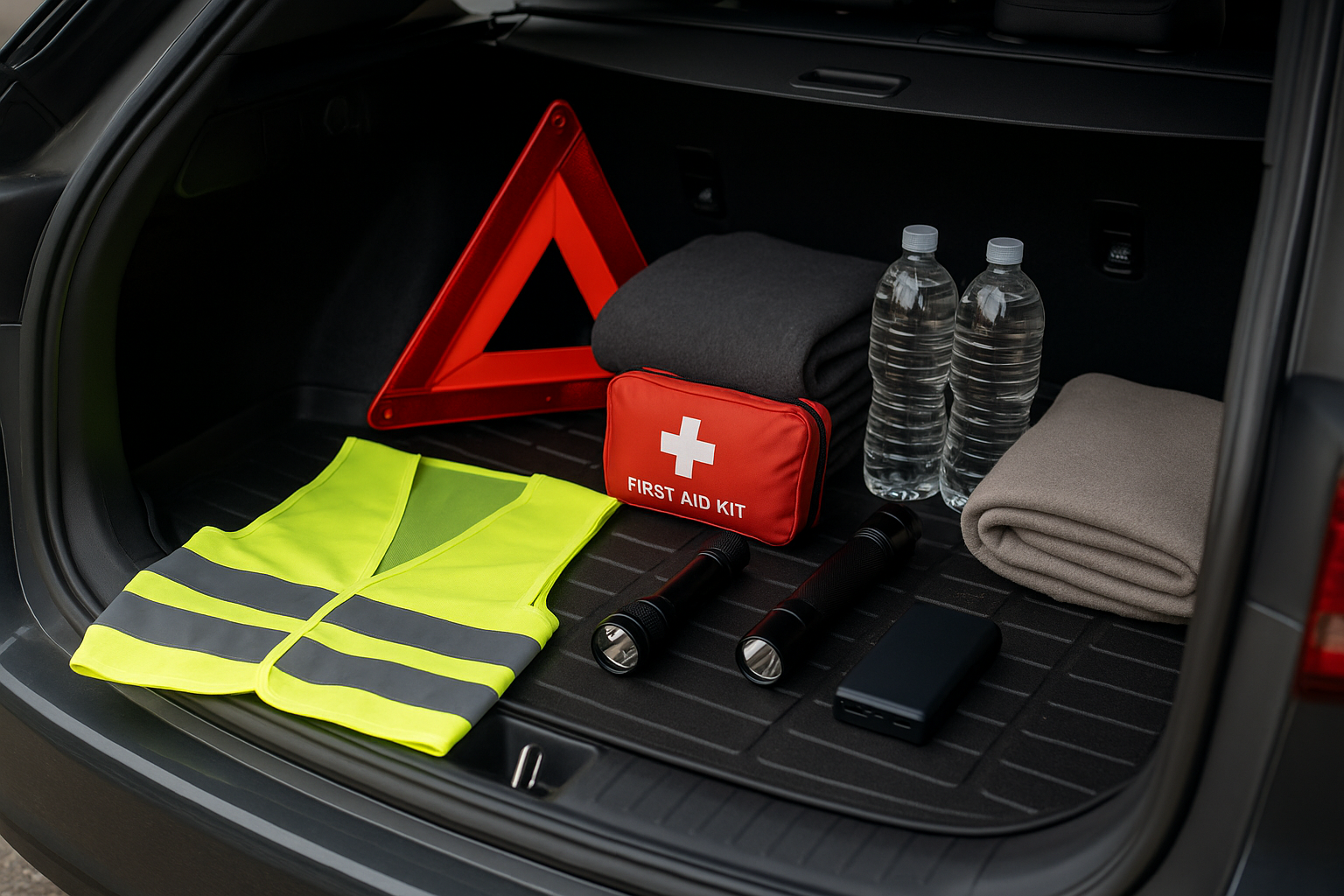
Why keep an emergency kit in the car?
Breakdowns and bad weather rarely arrive with warning. With a compact, organized car emergency kit you stay visible, warm, informed and connected — even if help takes time to arrive.
Core principles: compact, visible, instantly accessible
- Compact & organized: one bag or bin; quick access to safety gear (reflective, light, first aid).
- Fixed location: trunk against the rear seat or under the floor, not loose in the cabin.
- Regular maintenance: see the maintenance section; schedule twice-yearly checks.
Complete car emergency checklist
1) Safety & visibility
- Reflective vest(s) (one per seat)
- Warning triangle (check local rules; required in many countries)
- Flashlight/headlamp with spare batteries or rechargeable (see our flashlight with powerbank)
- Work gloves, whistle
2) First aid & hygiene
- Compact first aid kit (plasters, gauze, bandage, antiseptic, gloves)
- Personal meds; foil blanket (mylar) optional
- Wipes, hand gel, tissues
3) Power & communications
- Powerbank (USB-C, 10,000–20,000 mAh)
- Emergency radio (crank/solar) for alerts
- 12V charger + correct cables (USB-C/Lightning/Micro-USB)
- Jumper cables or jump starter
4) Water, food & comfort
- 1–2 L water (consider heat/frost when storing in the car)
- Energy bars, nuts; small non-melting portions
- Thermal blanket, poncho, hat/gloves (seasonal)
- Paracord or bungees
5) Roadside tools
- Multitool/knife, duct tape, zip ties
- Tire repair kit or sealant; compact pump (foot or 12V)
- Screenwash, ice scraper (winter)
- Foldable tow strap (if legal and safe)
Seasonal advice
Winter
- De-icer, ice scraper, brush
- Extra warm clothing and blanket
- Washer fluid with antifreeze; battery health check
Summer
- Extra water (store shaded), sunscreen, cap
- Heat-resistant snacks; ventilation during standstill
EV-specific notes
- Carry multiple cables/adapters (AC cable, household plug emergency charger)
- Plan fallback charging points; offline maps for charging networks
- Manage HVAC carefully; pre-condition when possible
Kids & pets
- Kids: extra water/snacks, blanket, simple games
- Pets: water bowl, food, lead/crate, waste bags
Where to store your kit in the car
- Main kit: trunk, secured against movement
- Quick-grab items: vest, flashlight, powerbank up front
- Heat tip: avoid long, direct sun exposure for sensitive items
Maintenance & rotation
- Every 6 months: check/replace water, snacks, batteries, meds
- After long trips or seasonal change: review and restock
- Test flashlight, powerbank and cables; keep everything clean and dry
Legal notes
Requirements differ by country. Warning triangles and reflective vests are mandatory in many European countries; always verify local rules before travelling.
Tie-in with your overall plan
- Assign roles during breakdowns; practice exiting safely with vests/triangle
- Keep small cash in an envelope (see our article on emergency cash)
- Align car kit with your home emergency kit and storage plan
Summary
A car emergency kit should be compact, organized and up-to-date. Focus on visibility, first aid, power, water/food and seasonal items. With regular checks you stay safer and more independent — in any season and any country.