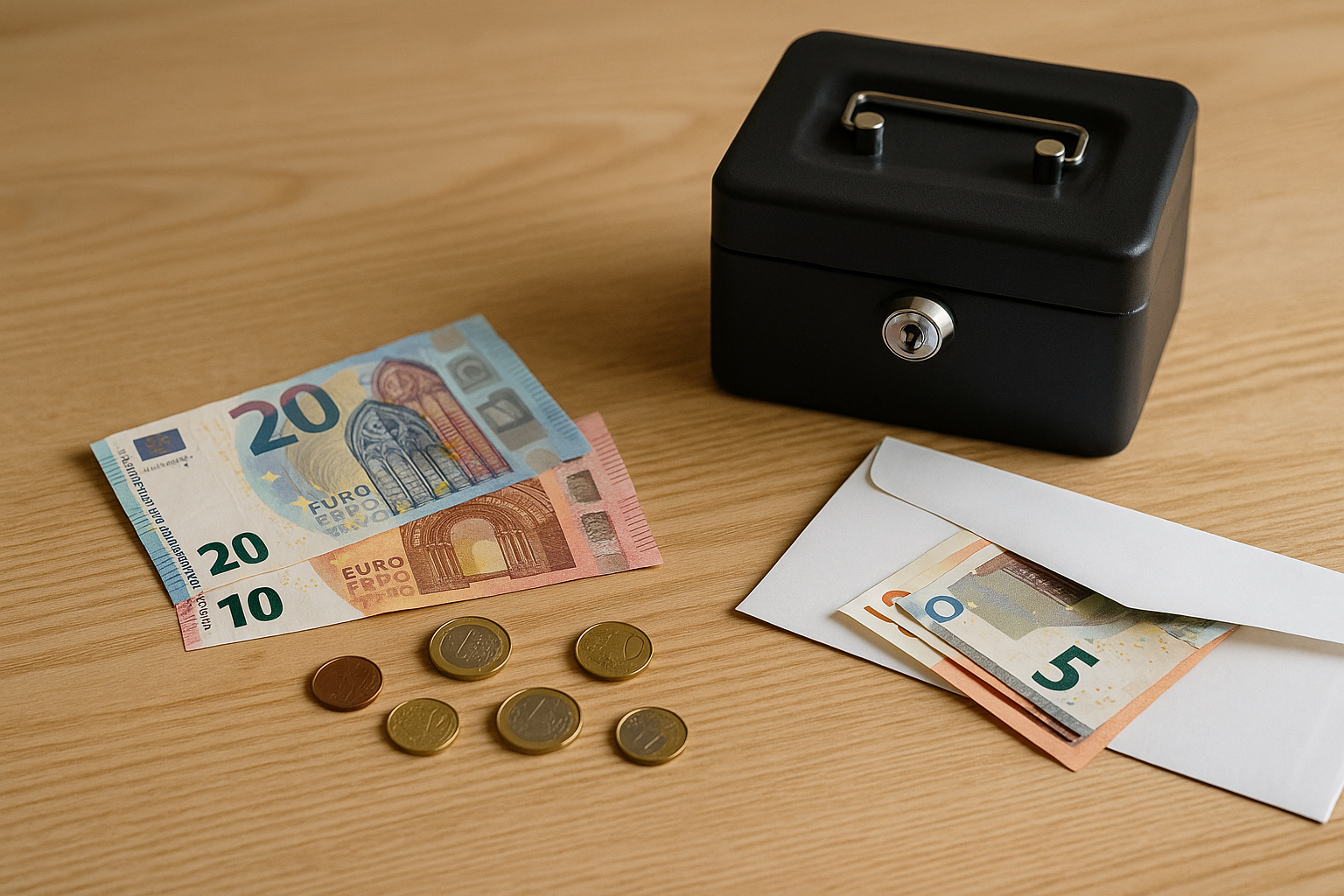
Why cash matters in emergencies
In an age of digital payments, it’s easy to overlook the value of cash. During blackouts or network failures, ATMs and payment systems can become unavailable. In such cases, physical money becomes your only direct way to buy food, fuel or medicine.
Benefits of keeping an emergency cash reserve
- Instant access: no waiting for systems to recover.
- Resilience: cash works even when the internet does not.
- Peace of mind: you remain financially independent during disruptions.
- Flexibility: suitable for small essential expenses like groceries or transport.
How much cash should you keep?
The ideal amount depends on your household, location and lifestyle. The following estimates offer a practical guideline:
| Scenario | Suggested Amount |
|---|---|
| Short emergency (1–3 days) | € 50 – € 150 |
| Moderate disruption (3–7 days) | € 100 – € 300 |
| Extended period or family preparedness | € 300 – € 600 or more |
Example: If a family of four spends around € 25 per day on essentials, € 300 covers about three days of basic needs.
Practical tips for managing cash at home
- Use small denominations: € 5, € 10 and € 20 bills are easiest to spend.
- Split your cash: store portions in different safe locations.
- Inspect yearly: replace torn or damaged bills.
- Keep it safe but accessible: you should reach it quickly in an emergency.
- Replenish after use: whenever you spend emergency funds, refill them soon.
Common mistakes
- Keeping too little: € 20 rarely lasts even a day.
- Storing everything in one place: fire or theft can erase your entire fund.
- Only large bills: small shops may not have change during crises.
- No restocking plan: include emergency cash in your regular preparedness checks.
Integrating cash into your overall plan
Cash is only one part of preparedness. Combine it with essential supplies such as water, food, a solar powerbank and a basic emergency kit. That way you’re equipped not just with money, but with real independence.
Conclusion
For most households, € 100 – € 300 in cash is a sensible starting point. Store it safely, check it regularly and pair it with basic supplies. In uncertain times, financial readiness brings peace of mind.