Why your kit’s location matters
A well-prepared emergency kit is essential, but it’s useless if hidden away. In a crisis, every second counts. Where you store your supplies determines how quickly you can act during a blackout, evacuation or storm.
The three main storage rules
- Accessible: reachable within seconds, even in the dark.
- Cool and dry: heat, moisture and sunlight shorten shelf life.
- Safe: away from children but known to adults.
Best places in the house
- Utility closet or hallway storage: perfect for water, tools, food and a stove.
- Living room: keep a compact base kit bag within reach.
- Bedroom: flashlight, powerbank and spare clothes ready to go.
- Car or shed: an extended kit for evacuation or travel.
Places to avoid
- Attic: too hot and hard to reach.
- Basement: damp unless properly sealed and ventilated.
- Uninsulated garage: risk of freezing or condensation.
Organization tips
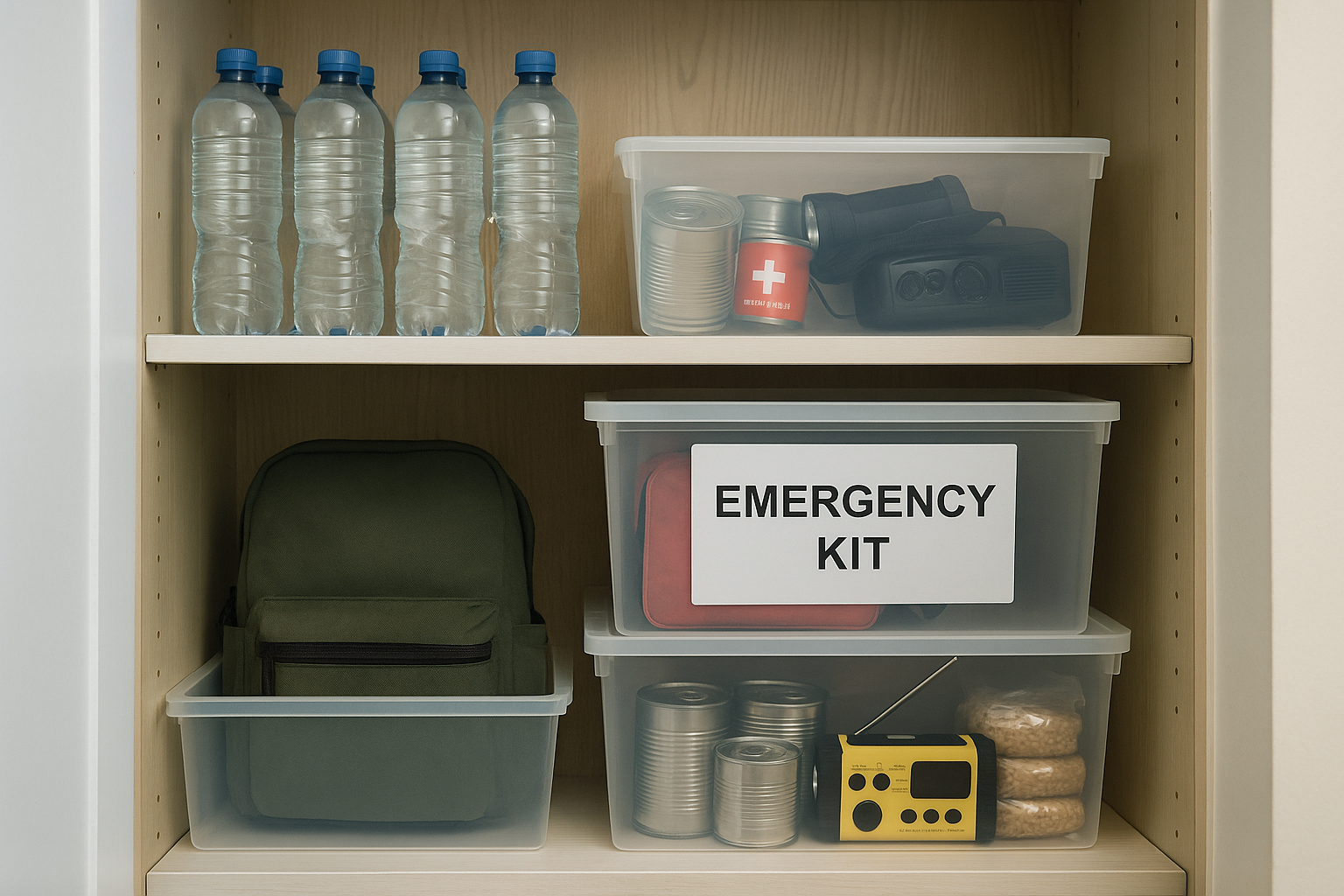
- Use sturdy bins with lids and clear labels.
- Keep one central storage box and one grab bag.
- Check supplies twice a year — especially water, batteries and medication.
- Store important documents in a waterproof folder nearby.
For families
Have kids? Give them a flashlight and snacks in their room, and teach them where the main kit is. Parents can store a small cash reserve (emergency fund) in the same area.
Storage checklist
- Dry, dark, cool
- Easy to access
- Waterproof containers
- Clear labels and rotation dates
- Cash and documents together
Conclusion
An emergency kit only works if it’s accessible, complete and maintained. Choose a clear location, note it in your plan, and make sure everyone in the household knows. Preparation brings calm — and calm saves time.