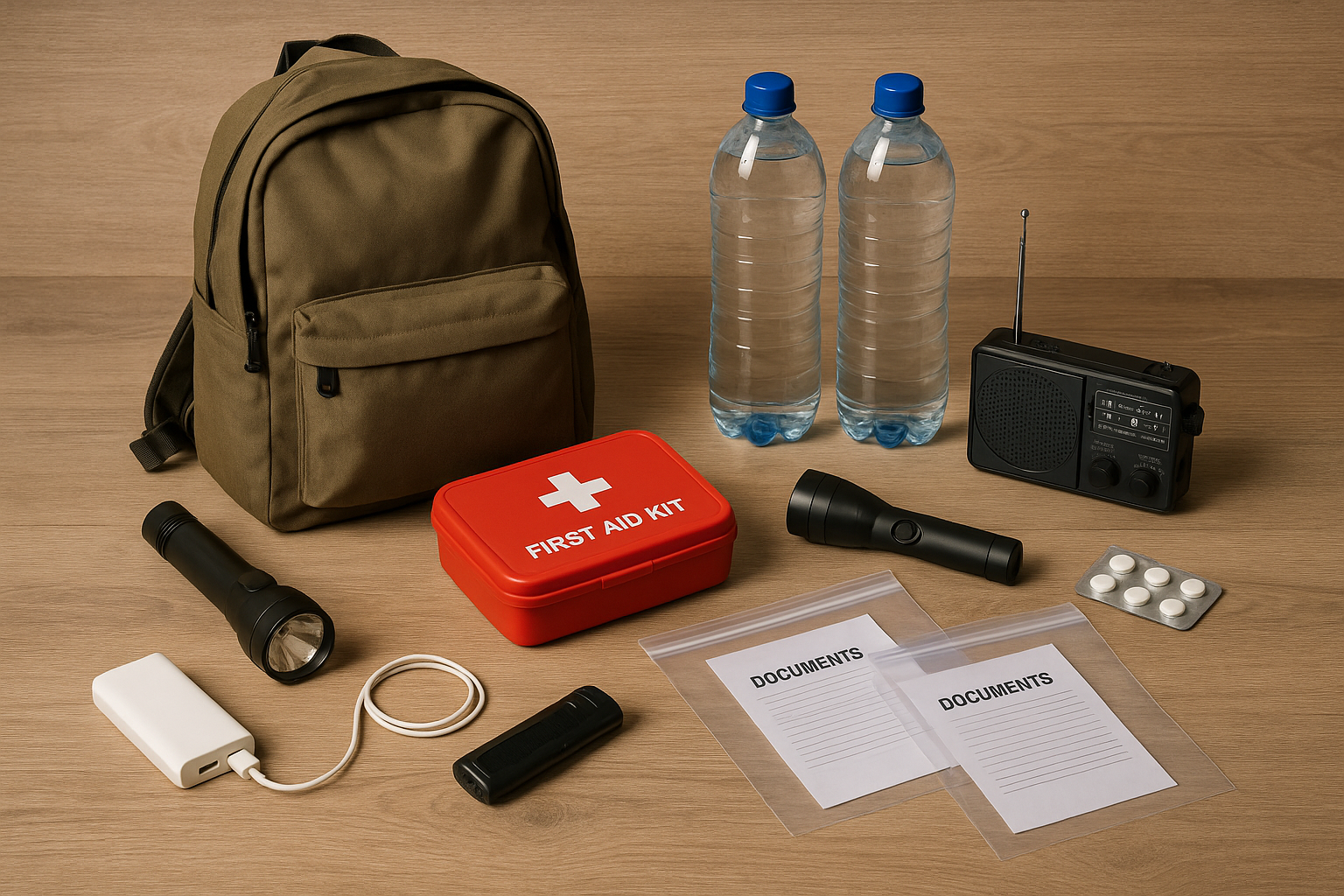
Why a 72-hour kit matters
Blackouts, water disruptions, payment outages or local evacuations can freeze daily life. A well-built kit prevents panic and buys decision time. Aim for 72 hours of self-reliance as a baseline.
Water & food
- Water: at least 3 liters per person per day. For 72 hours: 9 liters pp.
- Food: shelf-stable and simple: oats, rice, pasta, freeze-dried meals, nuts, canned veg/fish, energy bars.
- Pro tip: add electrolytes/ORS and a lightweight cook set.
First aid & hygiene
- Full first aid kit: bandages, gauze, disinfectant, scissors, tweezers, gloves, pain relief.
- Personal meds + dosage/allergy list.
- Hygiene: wipes, soap, hand sanitizer, dental care, trash bags, toilet paper.
Lighting, power & comms
- Flashlight/headlamp + batteries or rechargeable (USB).
- Power banks (10,000 mAh+), cables.
- Emergency radio (crank/solar) with alerts.
Tools & clothing
- Multitool, duct tape, paracord, storm matches/lighter, emergency blankets.
- Seasonal clothing (rain/thermal), extra socks, sturdy footwear.
Documents & cash
- Copies of ID, insurance, contacts, medical info (paper + encrypted USB).
- Cash in small bills.
Storage & maintenance
- Keep in a grab bag at a fixed location; waterproof with dry/zip bags.
- Maintenance: pick one annual check month to test batteries, rotate food, update sizes and the checklist.
Per-person quick list (72h)
- Water: 9 L | Food: 6–9 meals | First aid: 1 kit | Lights: headlamp + flashlight | Power bank: 1–2 | Radio: 1 per household
This structure keeps you independent during the critical first days and reduces stress-driven mistakes.